
Growing a productive raised bed vegetable garden requires the right fertilizer to ensure healthy plants and abundant harvests. Choosing the best fertilizer for raised beds involves considering nutrient composition, organic versus synthetic options, and ease of use. Below is a summary table of top fertilizers designed specifically for raised bed vegetable gardening, showcasing their primary benefits, formulations, and intended use.
| Product Name | Brand | Key Feature | Weight |
|---|---|---|---|
| Miracle-Gro Raised Bed Plant Food | Miracle-Gro | Feeds up to 3 months for fruits and vegetables | 2 Pounds |
| Miracle-Gro Performance Organics Raised Bed Nutrition | Miracle-Gro | Organic, natural ingredients, visible results in 7 days | 2.5 Pounds |
| Dr. Earth Organic 5 Tomato, Vegetable & Herb Fertilizer | Dr. Earth | No GMOs, chicken manure, or sewage sludge | N/A (Poly Bag) |
| Jobe’s Organics Granular Garden Fertilizer | Jobe’s Organics | OMRI-listed organic, NPK 2-5-3 formula for yield | 4 Pounds |
| Down to Earth Organic Vegetable Garden Fertilizer 4-4-4 | Down To Earth All Natural Fertilizers | Safe for environment, slow-release nutrients | 5 Pounds |
Miracle-Gro Raised Bed Plant Food

Miracle-Gro Raised Bed Plant Food is designed explicitly to feed plants growing in raised bed gardens for up to three months. It supports a broad variety of fruits, vegetables, flowers, and herbs, making it a versatile option for diverse garden setups. When combined with Miracle-Gro Raised Bed Soil, it enhances nutrient uptake leading to potentially greater harvests compared to unfed plants.
Its long-lasting formula means less frequent feeding, offering convenience to gardeners. This plant food is formulated to deliver essential nutrients that promote vigorous growth and improved yield, accommodating the unique soil environment of raised beds. Ideal for gardeners looking to maintain productivity without frequent applications.
Miracle-Gro Performance Organics Raised Bed Plant Nutrition Granules
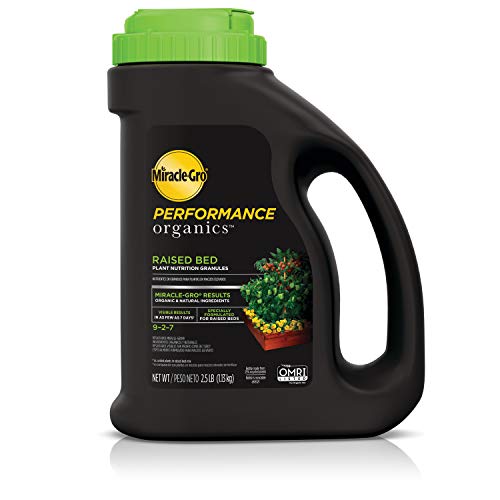
This product combines the trusted performance of Miracle-Gro with organic and natural ingredients formulated specifically for raised bed gardening. It’s suitable for vegetables, fruits, herbs, and flowers, delivering a natural boost without synthetic chemicals.
Gardening users can expect visible improvements within about seven days, thanks to the effective nutrient release. It offers a sustainable choice for gardeners prioritizing organic methods while seeking rapid plant response. The granules’ composition supports soil health and beneficial microbial activity, enhancing overall bed vitality.
Dr. Earth Organic 5 Tomato, Vegetable & Herb Fertilizer Poly Bag

Dr. Earth Organic 5 fertilizer is focused on increasing the nutrition and flavor of homegrown vegetables and herbs. Its formula excludes GMOs, chicken manure, and sewage sludge, making it a clean, environmentally responsible choice.
It provides optimum primary nutrients, supporting the development of healthier plants with improved vigor. The product’s organic nature suits gardeners aiming to enrich raised bed soil naturally without harmful residues, especially valuable for edible plantings.
Jobe’s Organics Granular Garden Fertilizer for Vegetables and Tomatoes

Jobe’s Organics offers an OMRI-listed organic granular fertilizer formulated to provide vegetables and tomatoes with balanced nutrition. The NPK ratio of 2-5-3 targets nutrient needs to promote yields and vibrant foliage.
This formula helps reduce nutrient runoff and environmental impact. The 4-pound bag delivers ease of application without messy runoff or odors. The absence of synthetic chemicals makes it an excellent choice for certified organic gardeners or those who prioritize natural soil enrichment.
Down to Earth Organic Vegetable Garden Fertilizer 4-4-4

This fertilizer by Down to Earth features a balanced 4-4-4 NPK formula with slow-release nutrients, making it suitable for various vegetable crops in raised beds. Its non-toxic ingredients are safe for beneficial insects, pollinators, pets, and the surrounding ecosystem.
Designed to provide steady nutrient supply over time, it helps prevent nutrient leaching while supporting long-term soil fertility. This environmentally conscious option appeals to gardeners seeking a gentle yet effective fertilizing solution for sustained garden health.
Buying Guide: Choosing the Best Fertilizer for Your Raised Bed Vegetable Garden
When selecting a fertilizer for raised bed vegetable gardening, consider these essential factors to maximize plant health and yield:
Nutrient Composition
Look for balanced NPK (Nitrogen-Phosphorus-Potassium) ratios appropriate for vegetable growth stages. For most vegetable gardens, a balanced formula (like 4-4-4) or slightly higher phosphorus (for root and fruit development) is beneficial. Some vegetables may require specialized blends.
Organic vs. Synthetic
Organic fertilizers improve soil structure and microbial health while supplying nutrients more gradually. Synthetic fertilizers can provide faster nutrient availability but risk burning plants if misused and might leach quickly from soil. Choose organic if you prefer sustainable gardening and synthetic for quicker results.
Release Rate
Slow-release formulas ensure steady feeding over weeks or months, reducing the need for frequent applications. Fast-release nutrients show rapid effects but can require repeated feeding and careful application.
Application Convenience
Granular fertilizers are easy to apply and integrate into soil, while liquid fertilzers may require frequent watering or foliar spray. Consider time and effort when selecting.
Environmental Impact and Safety
Choose products free of harmful chemicals, GMOs, and contaminants. Those safe for pollinators and pets help maintain a healthy garden ecosystem.
Compatibility With Soil and Plants
Consider your soil type and the specific nutritional requirements of your vegetable varieties. Some fertilizers are formulated to complement raised bed soils and specific plants better than others.
Brand Reputation and Certification
Look for reputable brands and organic certification such as OMRI (Organic Materials Review Institute) listing for credible organic products.