
Using fertilizer spikes for fruit trees is an effective method to deliver essential nutrients directly to the root zone, promoting healthier growth and abundant fruit production. Below is a comparison table of the top-quality fertilizer spikes available on Amazon, featuring well-known brands designed specifically for fruit and citrus trees.
| Product | Brand | NPK Ratio | Application Frequency |
|---|---|---|---|
| Miracle-Gro Fruit & Citrus Plant Food Spikes | Miracle-Gro | Not specified | Once per season, Spring and Fall |
| Jobe’s Garden Fertilizer Spikes, 9 Count | Jobe’s Organics | 8-11-11 | Twice a year, early Spring and late Fall |
| SimplyGro Fertilizer Spikes for Citrus & Fruit Trees & Shrubs | SimplyGro | 8-8-8 | Twice a year, Spring and Fall |
| Power Spike for Fruit Trees | Power Spike | Not specified | Not specified |
| Jobe’s Fruit & Citrus Fertilizer Spikes 8-11-11 | Jobe’s Organics | 8-11-11 | Twice a year, early Spring and late Fall |
Miracle-Gro Fruit & Citrus Plant Food Spikes
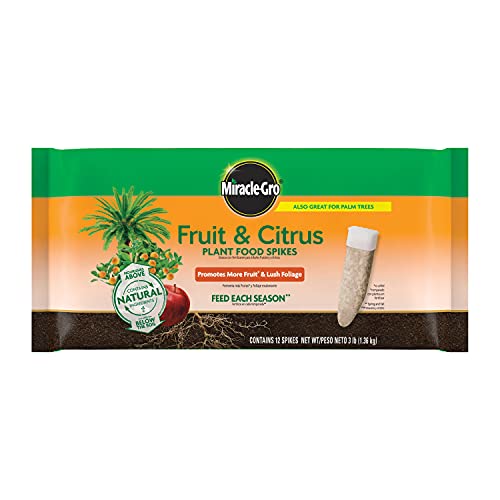
Miracle-Gro provides fertilizer spikes designed to promote more fruit and lush foliage compared to unfed trees. The spikes contain natural ingredients and are easy to apply, requiring feeding only once per season both in spring and fall. This slow-release formula targets the root zone directly, enhancing nutrient uptake efficiency. The product supports overall fruit tree health, encouraging robust growth and enhanced fruit yield with minimal effort.
Jobe’s Garden Fertilizer Spikes, Easy Plant Care Slow Release Fertilizer for Fruit and Citrus Plants and Trees, 9 Count

These Jobe’s Organics spikes come in a pack of nine, formulated with an 8-11-11 NPK ratio, precisely balanced to meet the nutritional needs of fruit and citrus trees. The product is designed to avoid waste through slow-release nutrients which reduce runoff, mess, and odors. Application is straightforward—spikes should be placed around the tree’s drip line twice a year in early spring and late fall. This fertilizer enhances fruit production and vibrant foliage, aiding sustainable growth.
SimplyGro Fertilizer Spikes for Citrus & Fruit Trees & Shrubs (24 Spikes – 6.0 Lbs)

SimplyGro offers an 8-8-8 NPK fertilizer spike, tailored specifically for citrus, fruit, nut, and berry trees. Each 5-inch spike provides sustained nutrition for up to three months. This set-it-and-forget-it solution minimizes the risk of over-fertilizing and nutrient runoff, protecting local ecosystems. Best results are seen with applications twice a year—in spring when trees have high energy needs and again in fall during energy storage. These spikes feed roots directly to improve foliage color, flower development, and fruit yields.
Power Spike for Fruit Trees. Essential Nutrient Spike formulated to Feed All Types of Fruit Trees

The Power Spike fertilizer combines essential nutrients designed to feed various fruit trees such as apple, peach, orange, lemon, and lime. It focuses on addressing common nutrient deficiencies that can stunt growth or reduce fruit quality. This combination spike aids in enhancing fruit development by delivering key elements directly to the roots. While precise NPK values are not specified, its formulation aims to improve fruit tree health and encourage bountiful harvests.
Jobe’s Fruit & Citrus Fertilizer Spikes 8-11-11 Time Release Fertilizer for All Fruit Trees, 9 Spikes per Package (3)

These Jobe’s Organics fertilizer spikes deliver a time-release 8-11-11 NPK formula that nourishes fruit and citrus trees starting at the root level. The pre-measured spikes reduce waste and eliminate runoff, mess, hazards, or odors often associated with traditional fertilization methods. Designed for application in early spring and late fall, they provide a steady nutrient supply where active roots grow, supporting strong tree development and vibrant fruit production over time.
Buying Guide: Choosing the Right Fertilizer Spikes for Fruit Trees
Selecting the most suitable fertilizer spikes for your fruit trees involves understanding several critical factors that impact both the health of your trees and the environment. Below are key considerations for informed purchasing:
Nutrient Composition (NPK Ratio)
The NPK ratio—representing the percentages of nitrogen (N), phosphorus (P), and potassium (K)—is vital. Nitrogen encourages leafy growth, phosphorus aids root and flower development, and potassium supports overall plant health and fruit quality. Citrus and fruit trees generally benefit from balanced or slightly higher phosphorus and potassium content (e.g., 8-11-11 or 8-8-8) to enhance fruiting.
Application Frequency and Duration
Most fertilizer spikes provide slow-release nutrition lasting several weeks to months. Some require application once per season, while others work best with two annual applications (spring and fall). Understanding your tree’s growth cycle helps optimize feeding timing for maximum impact.
Ease of Use and Environmental Impact
Fertilizer spikes are prized for being mess-free, pre-measured, and reducing runoff. Choosing spikes that minimize nutrient leaching protects soil and nearby waterways. Organic and natural ingredient options also reduce chemical exposure, benefiting both your garden and the environment.
Specific Tree Type and Soil Needs
Ensure the spikes you select are formulated for your specific fruit tree species, whether citrus, apple, peach, or berry plants. Some spikes also include proprietary microbes or nutrients tailored to common deficiencies, improving nutrient uptake.
Quantity and Coverage Area
Consider how many spikes come in a package and the mature size of your fruit trees to adequately cover the root zone. Larger or multiple trees require more spikes for uniform nutrient distribution.
Organic Certification
If you practice organic gardening, look for OMRI-listed or USDA organic certified fertilizer spikes, which guarantee absence of synthetic chemicals and support sustainable gardening practices.