
Choosing the right irrigation filter helps protect emitters, sprinklers, and valves from sediment and debris, reducing maintenance and extending system life. The following five products are among the most relevant options for residential and small-scale irrigation setups, offering a range of mesh sizes, materials, and connection types. This guide highlights key features to help you compare performance and compatibility with your system.
| Product | Brand | Mesh/Filtration | Connections | Best For |
|---|---|---|---|---|
| One Stop Outdoor 3/4″ Drip Irrigation/Hydroponics Y Filter | One Stop Outdoor | 155 Mesh | 3/4″ FHT x 3/4″ MHT | Drip lines and micro sprinklers |
| Rusco 1-1/2-60-F Polyester Screened Spin-Down Filter | Rusco | 60 Mesh | 1-1/2″ connections | Heavy sediment, well water |
| SimPure 100/500 Micron Spin Down Sediment Filter | SimPure | 100/500 Micron | 1″ MNPT + 3/4″ FNPT + 3/4″ MNPT | Whole-house pre-filtration |
| DIG P09-155 3/4″ FHT X MHT All-Purpose Filter | DIG | 155 Mesh (polyester) | 3/4″ FHT x MHT | Inline irrigation filtration |
| Rain Bird PRF07530S In-Line Drip Filter | Rain Bird | 3/4″ filter with 30 PSI regulator | 3/4″ Male Pipe Thread | Drip systems with regulation |
Note: Each product serves different filtration needs—from simple inline drip filtration to spin-down sediment removal for well water. Review mesh size, flow rate, and connection types to ensure compatibility with your irrigation layout and water source.
One Stop Outdoor 3/4″ Filter For Drip Irrigation

The One Stop Outdoor filter is a versatile screen filter designed for drip irrigation and micro sprinkler systems. Its 155-mesh screen provides strong debris interception while maintaining low friction loss, which enables longer intervals between cleanings. The unit’s 3/4″ FHT and 3/4″ MHT hose thread connections fit many standard irrigation layouts, simplifying installation. This filter’s all-purpose screen construction helps protect emitters from sediment, rust, and organic debris that can accumulate in residential irrigation water supplies.
Key advantages include chemical resistance for compatibility with common irrigation additives, a large filtration area, and ease of service. For gardens with moderate to heavy sediment or well water, this model can reduce clogs in drip lines and micro-sprinklers, supporting longer system life and more consistent watering. Consider pairing with a flush valve or periodic flush to maintain peak performance.
Rusco Spin-Down Filter System

The Rusco spin-down filter uses centrifugal separation to remove sediment from water, with a clear cover that allows visual inspection of buildup. The Polyethylene/ PVC construction ensures durability in outdoor environments. Its 1-1/2″ sizing is suitable for larger irrigation mains or well systems where higher flow rates are present. Regular flushing helps prevent clogging and maintains effective filtration, especially in areas with sandy or iron-rich water supplies.
Features to note include a robust filter head and easy replacement cartridges, which can simplify maintenance. The filter is well-suited for well water or municipal sources with higher sediment loads. When sizing for a system, ensure the downstream piping and emitters match the 1-1/2″ inlet and outlet to avoid pressure drops. If sediment levels fluctuate seasonally, this model provides reliable performance with minimal maintenance.
SimPure Spin Down Sediment Filter

The SimPure unit is designed for whole-house use, with a durable plastic housing and a stainless-steel mesh screen. It targets contaminants such as sediment, rust, and sand, helping protect water-using appliances and fixtures. The kit supports multiple connection types (1″ MNPT and 3/4″ FNPT/MNPT), making it adaptable to common piping configurations. A transparent bowl aids in deciding when to flush the filter, which is helpful for homeowners managing well or city water systems.
Benefits include flushability, reusability, and a design that minimizes pressure loss while maintaining a broad filtration surface. This is a practical option for families seeking pre-filtration ahead of irrigation manifolds or fountains, as well as for general home water systems where sediment is a concern. As with all spin-down filters, periodic flushing is essential to maintain optimal performance.
DIG P09-155 Drip Filter Inline
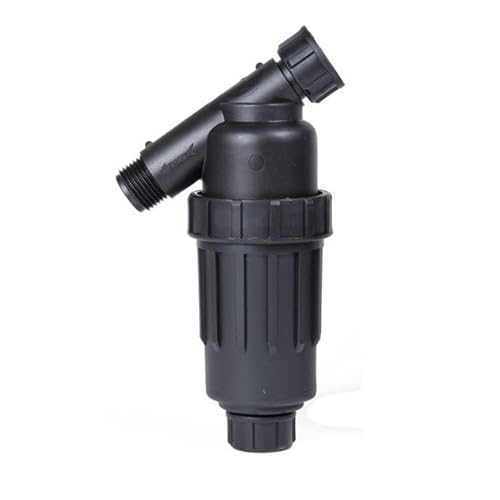
The DIG P09-155 inline Y filter provides ultimate filtration for drip irrigation and micro sprinklers. It uses a 155-mesh polyester screen and supports up to 120 PSI with a flow rate up to 13 GPM, making it suitable for many residential systems. The 14.9 square inches of filtration area reduces cleaning frequency and minimizes pressure loss, contributing to system longevity. The 3/4″ FHT x MHT configuration supports common irrigation layouts.
Key considerations include the available mesh options (155 or 200) and the device’s integrated flush capability. This model is a practical pick for homeowners who require reliable debris removal to protect downstream emitters without adding complexity to the system.
Rain Bird In-Line Drip Filter With Regulator

The Rain Bird PRF07530S combines filtration and 30 PSI regulation in a compact inline unit. The 3/4″ male pipe thread connection simplifies installation and reduces component count, while the integrated regulator protects downstream components from pressure spikes. This model is particularly suitable for drip systems requiring both filtration and pressure control in one compact package, improving consistency in emitter performance.
Consider its regulator compatibility with your system’s design pressure. The simplified installation can be advantageous for DIY projects or quick retrofits, especially when upgrading from a basic filter to a combined filtration/regulation solution. Regular inspection ensures clean filtration and regulator performance, particularly in older irrigation networks where sediment and scale accumulate over time.
Buying Guide: Key Purchase Considerations And Comparisons
- Filtration type: Spin-down filters excel at ongoing sediment removal with periodic flushing, while screen filters are simple inline options ideal for fine debris protection. Choose based on sediment levels and maintenance preferences.
- Mesh size and filtration rating: Finer meshes (e.g., 100–155 micron) capture smaller particles but may require more frequent cleaning. Coarser meshes (e.g., 60–100 mesh) handle larger sediment with less frequent maintenance.
- Flow rate and pressure: Verify the filter’s maximum flow rate and pressure range to match your irrigation system’s capacity. Undersized filters can cause pressure loss and reduced emitter performance.
- Connections and sizing: Ensure compatible thread types (FHT, MNPT, MHT) and pipe sizes (3/4″, 1″, 1-1/2″) with your header and emitters. Consider existing components to simplify installation.
- Maintenance routine: Spin-down and screen filters require flushing or cleaning. Plan for periodic maintenance and consider models with clear housings for easy inspection.
- Integrated features: Some filters include built-in regulators or flush caps. These features can simplify installation and improve system protection but may add cost.
- Water source and contaminants: For well water with high sediment, spin-down filters in larger sizes are beneficial. For city water with moderate debris, inline screens with manageable maintenance work well.
- Durability and materials: Outdoor-rated housings and UV-stable plastics extend life in exposed installations. Check compatibility with chemicals used in your irrigation schedule if applicable.
- Replacement parts and serviceability: Consider availability of replacement screens, seals, and cartridges. Easier access reduces downtime during maintenance.
- Budget and long-term value: Evaluate initial cost against maintenance frequency, replacement part costs, and potential savings from reduced pump wear and longer emitter life.