
Growing a garden teaches patience, science, and responsibility. This guide highlights five top kids’ gardening kits that blend hands-on activities with learning moments. Each option supports creativity, basic botany concepts, and safe, engaging play for children. The table below summarizes key aspects to help you compare quickly.
| Product | Brand | Highlights | Typical Age |
|---|---|---|---|
| DUYOYU Kids Plant Growing Kit | DUYOYU | 5+ | |
| Root Viewer Kit for Kids | PLANTMEW | 5-12 | |
| National Geographic Flower & Herb Kit | Blue Marble | 5-12 | |
| Dan&Darci Root Viewer Kit | Dan&Darci | 4-8 | |
| Kinderific Gardening Set | Kinderific | 3-8 |
DUYOYU Kids Plant Growing Kit

The DUYOYU Kids Plant Growing Kit provides a mini greenhouse experience from planting to flowering. It emphasizes teaching plant growth mechanics while offering hands-on responsibility for watering and sunlight. This kit is designed to engage children with a practical, educational approach, making gardening a tangible science project rather than a simple craft.
Root Viewer Kit for Kids with 6 Seed Varieties

This kit pairs STEM exploration with a transparent planter to reveal roots and shoots. It includes six seed varieties—kidney bean, pea, soya-bean, radish, chili, and carrot—allowing kids to compare growth rates and observe root structures. It’s a dynamic, week-by-week science activity that reinforces botanical concepts and curiosity about plant life cycles.
National Geographic Flower & Herb Gardening Kit
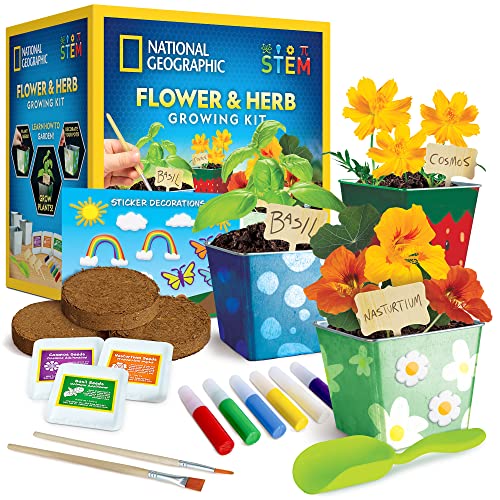
This National Geographic kit offers a complete growing experience with cosmos, nasturtium, and basil seeds, plus three stainless steel pots for decoration and planting. It includes paint, stickers, and a detailed learning guide, supporting creativity and basic horticulture through a decorative, hands-on approach.
Dan&Darci Root Viewer Kit for Kids

The Dan&Darci Root Viewer Kit provides a see-through planter and a complete growing kit with nutrient-rich soil and high-germination seeds. The included booklet explains plant biology in clear steps, turning a simple planting activity into an educational botany lesson that’s accessible for younger children.
Gardening Set for Kids by Kinderific

This 9-piece Kinderific kit combines a bright tote bag with essential tools—shovel, rake, fork, trowel, gloves, a watering can, and more. The kid-friendly design emphasizes safe handling and ergonomic grips, enabling children to explore gardening basics while keeping materials organized and portable for outdoor activity.
Buying Guide: Key Purchase Considerations
- Educational Value: Look for kits that clearly explain plant life cycles, photosynthesis basics, and root development. Transparent components or included guides help children connect actions to outcomes.
- Age Appropriateness: Select kits aligned with a child’s reading level and dexterity. Some kits are tailored for younger kids with simple steps; others suit older children with more complex projects.
- Durability and Safety: Prioritize kid-friendly, non-toxic materials, and tools with rounded edges. Durable components reduce breakage during enthusiastic play.
- Hands-On Experience: Good kits combine planting, watering, observing, and decorating to sustain interest. Features like grow lights or colorable pots add engagement, but simple setups work well too.
- Curriculum Alignment: If intended for a classroom or structured learning, ensure the kit offers a coherent progression of activities and a clear learning outcome.
- Garden Type and Maintenance: Consider whether the kit uses soil, hydroponics, or decorative plants. Some options emphasize quick sprouts, others teach longer growth cycles.
- Expansion Potential: Kits that can be augmented with extra seeds or tools provide ongoing learning opportunities as interests grow.
- Presentation and Craft Elements: Paintable pots, stickers, and decorative labels encourage creativity and personal investment in the garden space.
Across these options, each kit aims to balance fun with foundational gardening concepts. Parents and educators can select based on the child’s age, interest level, and whether the goal is a solo project or a family activity. The included guides and components help structure experiments, while the hands-on nature of gardening fosters observation, patience, and curiosity about the natural world.