
Choosing the best organic fertilizer for citrus trees ensures vibrant growth and abundant fruit while maintaining soil health. This guide covers top organically certified options designed specifically to nourish citrus varieties such as oranges, lemons, limes, and avocados. Below is a summary table featuring the most recommended products tailored to diverse planting needs and tree sizes.
| Product | Brand | Key Features | Size |
|---|---|---|---|
| Down to Earth Organic Citrus Fertilizer Mix | Down To Earth All Natural Fertilizers | 6-3-3 NPK, includes calcium, sulfur, zinc, iron, OMRI listed | 1 lb |
| Jobe’s Organics Granular Garden Fertilizer | Jobe’s Organics | 3-5-5 NPK, OMRI listed, minimizes runoff and odors | 4 lbs |
| Espoma Organic Citrus-Tone | Espoma | 5-2-6 NPK, contains 5% calcium, enriched with Bio-tone formula | 4 lbs |
| FoxFarm Happy Frog Citrus & Avocado Fertilizer | FoxFarm | 7-3-3 NPK, mycorrhizal fungi enhanced, organic formula | 4 lbs |
| Jobe’s Organics Fruit & Citrus Tree Fertilizer Spikes | Jobe’s | 3-5-5 NPK, time-release spikes, OMRI organic certified | 6 spikes per package |
Down to Earth Organic Citrus Fertilizer Mix 6-3-3

This fertilizer features a balanced 6-3-3 nitrogen-phosphorus-potassium (NPK) ratio designed specifically for citrus trees. Formulated with essential secondary nutrients like calcium, sulfur, zinc, and iron, it supports lush new growth, greener foliage, fragrant blossoms, and abundant fruit production. Certified by the Organic Materials Review Institute (OMRI), it qualifies for organic gardening adhering to USDA standards. The inclusion of micronutrients aids in supplying comprehensive nutrition for soil and tree health. This 1-pound box is ideal for targeted feeding and smaller citrus plantations.
Jobe’s Organics Granular Garden Fertilizer for Citrus

Produced to avoid chemical runoff and unpleasant odors, this granular fertilizer features a 3-5-5 NPK feed tailored to the needs of fruit and citrus plants. It ensures nutrients are available for promoting high yield and vibrant foliage without synthetic additives. The OMRI listing confirms its organic integrity for sustainable fruit tree nutrition. The 4-pound bag supports larger garden use, minimizing waste and maximizing nutrient uptake efficiently.
Espoma Organic Citrus-Tone Natural Fertilizer 5-2-6

Espoma’s Citrus-Tone offers a 5-2-6 NPK blend enriched with 5% calcium to support strong cell structure and bountiful fruit development. Its unique Bio-tone formula incorporates beneficial microbes that foster healthy soil biology. Suitable for lemon, lime, orange, Meyer lemon, avocado, and nut trees, this fertilizer requires no mixing, simplifying application. Recommended during late winter pre-bloom, post-bloom spring, and fall applications, it promotes sustained vigorous growth and enhanced fruit quality.
FoxFarm Happy Frog Citrus & Avocado Fertilizer 7-3-3

Designed specifically for indoor or potted citrus and avocado trees, this 7-3-3 NPK organic fertilizer boosts fruit flavor, texture, and ripening. The formula features mycorrhizal fungi, which enhances root health by improving water and nutrient absorption. This nutrient-rich blend supports vigorous vegetative growth while reinforcing the tree’s natural defenses, resulting in healthy, fruitful trees ideal for home gardeners seeking high-quality organic options.
Jobe’s Organics Fruit & Citrus Tree Fertilizer Spikes
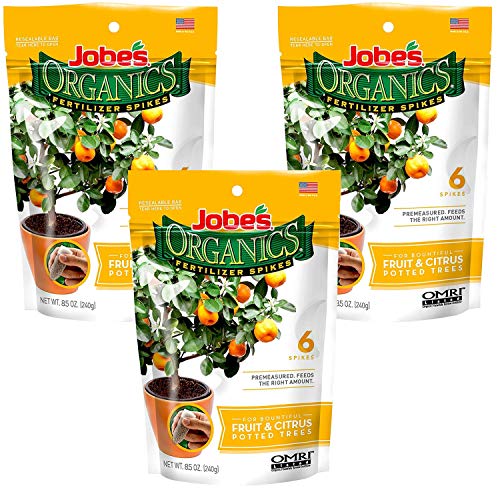
These time-release fertilizer spikes provide steady nourishment directly to the root zone over an extended period. Certified organic by USDA and OMRI, the 3-5-5 NPK fertilizer contains Jobe’s Biozome microorganism blend that accelerates nutrient breakdown for quicker availability. Ideal for container or in-ground trees, the spikes eliminate mess and simplify feedings, helping maintain steady, reliable growth with minimal effort.
Buying Guide for Organic Fertilizers for Citrus Trees
When selecting an organic fertilizer for citrus trees, consider these key factors to optimize results:
Nutrient Composition
Citrus trees thrive on fertilizers balanced in nitrogen (N), phosphorus (P), and potassium (K). Look for formulations providing adequate nitrogen for healthy foliage, phosphorus for root development and flowering, and potassium for fruit quality and disease resistance. Secondary nutrients such as calcium, magnesium, sulfur, and micronutrients like iron and zinc are essential to prevent deficiencies common in citrus species.
Certification and Organic Integrity
Choose products certified by recognized bodies like OMRI (Organic Materials Review Institute) or USDA Organic to ensure fertilizers are free from synthetic chemicals, pesticides, and harmful additives. These certifications guarantee quality and suitability for organic gardening practices.
Application Method and Convenience
Fertilizers come in granular, spike, or liquid forms. Granular fertilizers offer slow release and ease of use for both small and large trees. Spikes provide time-released feeding targeting the root zone and reduce application frequency. Liquid fertilizers allow quicker nutrient absorption, suitable for indoor or container trees requiring more precise control.
Soil Health and Microbiology
Organic fertilizers enriched with beneficial microbes, including mycorrhizal fungi and bacterial inoculants, improve soil structure, nutrient uptake, and root growth. Products with proprietary bio-enhancers like Bio-tone or Biozome stimulate microbial activity and accelerate nutrient availability, promoting longer-term soil fertility.
Tree Type and Growth Stage
Consider fertilizer formulations tailored to specific citrus species or trees at different growth phases (young vs. mature, indoor vs. outdoor). Timing and application frequency will vary accordingly. For example, higher nitrogen supports vigorous vegetative growth in young trees, while older fruiting trees benefit from formulas emphasizing potassium.
Environmental Impact and Safety
Opt for fertilizers produced with minimal runoff risk, reduced odor, and safe for local ecosystems. Organic options often emphasize sustainability, protecting beneficial insects and preventing soil toxicity common with synthetic fertilizers.