
Choosing the right pressure reducer is essential for reliable drip irrigation. The right regulator maintains consistent flow, protects emitters, and helps water and energy efficiency across landscapes, gardens, and nurseries. This guide highlights top options that are popular in American irrigation setups, with practical notes on compatibility, flow ranges, and installation considerations. Below is a quick summary of five strong choices to compare before you buy.
| Product | Brand | Regulated PSI | Notes |
|---|---|---|---|
| Senninger Pressure Regulator 25 PSI | Senninger Irrigation Inc. | 25 | Low-flow, landscape-grade regulator suitable for drip, soaker hose, and micro-irrigation systems |
| Rain Bird HT07525PSI Drip Regulator | Rain Bird | 25 | 3/4″ hose-thread connection; ideal for drip lines and emitters |
| Breezliy 2-Pack 25 PSI Regulator | Breezliy | 25 | Durable ABS, 3/4″ FHT to 3/4″ MHT; budget-friendly option for larger installations |
| Vibrant Yard 25 PSI Brass Regulator | Vibrant Yard Company | 25 | Lead-free brass body for durability; 3/4″ FHT to 3/4″ MHT; robust for outdoor use |
| Rain Bird PRF07530S 30 PSI In-Line Regulator | Rain Bird | 30 | In-line regulator with integrated protection for downstream components |
The following sections profile five relevant regulators. Each entry includes a concise overview, compatibility notes, and practical considerations to help you select a model that fits your irrigation layout, whether you’re setting up a backyard drip system or a larger landscape installation.
Senninger 25 PSI Pressure Regulator For Drip
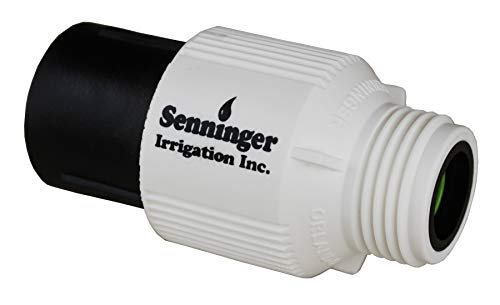
The Senninger Pressure Regulator Landscape Grade maintains a constant outlet pressure of 25 PSI (1.72 bar) across a flow range from 0.5 to 7 GPM (114–1590 L/hr). It is engineered for low-flow installations such as solid sets, drip lines, and soaker hoses, offering reliability and water-efficient performance. This regulator is water-tested for accuracy and can connect to any standard 3/4″ outdoor faucet or kit components. It supports distributing uniform droplet flow and can extend system life by reducing wear on pumps and emitters when used with compatible drip or micro-irrigation layouts.
Key considerations: match the 25 PSI setting to your emitter and line requirements; ensure compatible fittings are used; factor in downstream filtration and backflow prevention as needed; consider routine maintenance checks to avoid clogging or debris-related pressure changes.
Rain Bird HT07525PSI Drip Regulator

This regulator maintains a steady 25 psi pressure and supports a flow suitable for drip lines and emitters. It connects to any 3/4″ male pipe-threaded faucet or garden hose component and has a practical 20 GPM flow-through capacity. It’s a straightforward choice for users who want a compact, reliable solution integrated into residential or commercial drip systems. Installation simplicity and compatibility with standard hose-threaded components make it a popular option for updates to existing irrigation networks.
Key considerations: verify flow requirements of your emitters; watch for pressure drop across long runs; consider pairing with a filter or backflow preventer for cleaner water and longer emitter life.
Breezliy 2-Pack 25 PSI Regulators

This two-pack offers 25 PSI preset regulators with 3/4″ FHT to 3/4″ MHT connections, designed to regulate incoming water pressure for drip irrigation systems. The regulator features a 30–100 PSI compensation range and a durable ABS construction. It is compatible with standard hose or pipe thread connections and can be integrated with a timer, backflow preventer, or filter if needed. The compact design makes it suitable for modular installations or kits that require extra regulators for zoning or multi-line systems.
Key considerations: ensure the companion components match 3/4″ threads in your setup; check for corrosion resistance and long-term durability in outdoor environments; balance cost with the convenience of a multi-pack for multi-line irrigation plans.
Vibrant Yard 25 PSI Brass Regulator

The Vibrant Yard 25 PSI regulator uses a solid lead-free brass body with 3/4″ FHT to 3/4″ MHT connections, designed for outdoor irrigation systems. Its pressure range centers around 25 PSI, supporting steady distribution to drip lines and sprinklers. Brass construction adds durability for exposed environments, while the lead-free composition aligns with water safety standards. The unit is compatible with timers, filters, or backflow preventers to tailor a complete irrigation solution.
Key considerations: brass bodies offer durability but can be heavier and slightly more costly; verify downstream compatibility with emitters and hoses; consider environmental exposure and potential temperature-related effects on materials in outdoor installations.
Rain Bird PRF07530S In-Line Regulator (30 PSI)

The Rain Bird PRF07530S combines a 30 PSI regulation with a built-in Y-style filtration approach. This inline regulator reduces unit complexity by consolidating filtration and pressure regulation into a single piece, reducing component count and simplifying installation. It helps protect downstream drip components by maintaining steady pressure and preventing over-pressurization that can cause emitter wear or clogging. This option suits systems where 30 PSI is appropriate for accurate drip performance across a variety of emitters.
Key considerations: ensure 30 PSI matches your emitter requirements; look for compatibility with your existing risers and connectors; consider how downstream filtration affects system responsiveness and maintenance cycles. When used with 1/2″ threaded risers, verify thread compatibility and flow demands of your network.
Buying Guide: Key Purchase Considerations
- Regulated pressure: Match the regulator’s PSI to your emitter and tubing requirements. Drip irrigation systems typically perform best between 20 and 30 PSI, depending on emitter types and line length.
- Connection type and size: Most residential regulators use 3/4″ hose-thread or pipe-thread connections. Confirm inlet and outlet sizes (FHT/MHT) to fit existing hoses, manifolds, and risers.
- Material durability: Brass regulators offer longevity in outdoor environments but can be heavier and pricier; ABS and plastic bodies are lighter and economical but may wear faster under sun exposure.
- Integrated components: Some units include filters or backflow preventers. Integrated solutions reduce component count but ensure compatibility with your system design.
- Flow range and capacity: Check the regulator’s flow range (GPM or L/hr) to ensure it meets the needs of your drip lines and emitters, especially for larger landscapes or long runs.
- System goals: Consider how a regulator affects distribution uniformity, emitter longevity, and water efficiency. In some layouts, a single regulator near the supply could be ideal, while in others, multiple regulators protect different zones.
- Maintenance and installation: Choose models that are easy to install and service. Some units are compatible with standard timers and filters, which can simplify ongoing maintenance.
- Regulatory and safety considerations: Use lead-free brass where required by local codes, especially in potable irrigation zones or where water might be consumed directly by plants used for food.
When evaluating options, analyze your specific garden or landscape demands: line length, the number of emitters, water source pressure, and whether your system uses timers or automation. A plan that minimizes pressure fluctuations across zones will generally deliver more consistent moisture and better agricultural or horticultural results.